

Malta's business landscape has evolved significantly over the past decade. The island's economy now supports thousands of companies competing for attention across tourism, hospitality, retail, food and beverage, professional services, and technology sectors. In this environment, branding Malta businesses effectively determines which companies grow and which fade into the background. Strong branding creates recognition, builds trust, and gives customers clear reasons to choose one business over another.
Why Malta Businesses Need Strategic Branding
The Maltese market presents unique challenges. Limited geography means businesses often compete directly with neighbors. Customers have options within walking distance. Online platforms bring international competitors into local conversations. A Malta business without clear branding blends into the noise.
Effective branding addresses three core business needs:
- Differentiation in saturated markets where similar businesses offer comparable services
- Trust building with customers who have many choices and limited patience for unclear value propositions
- Consistency across all customer touchpoints, from storefronts to social media to packaging
Research from the University of Malta on consumer behavior confirms that branding directly influences purchasing decisions in the Maltese market. Customers gravitate toward businesses that present themselves professionally and consistently.
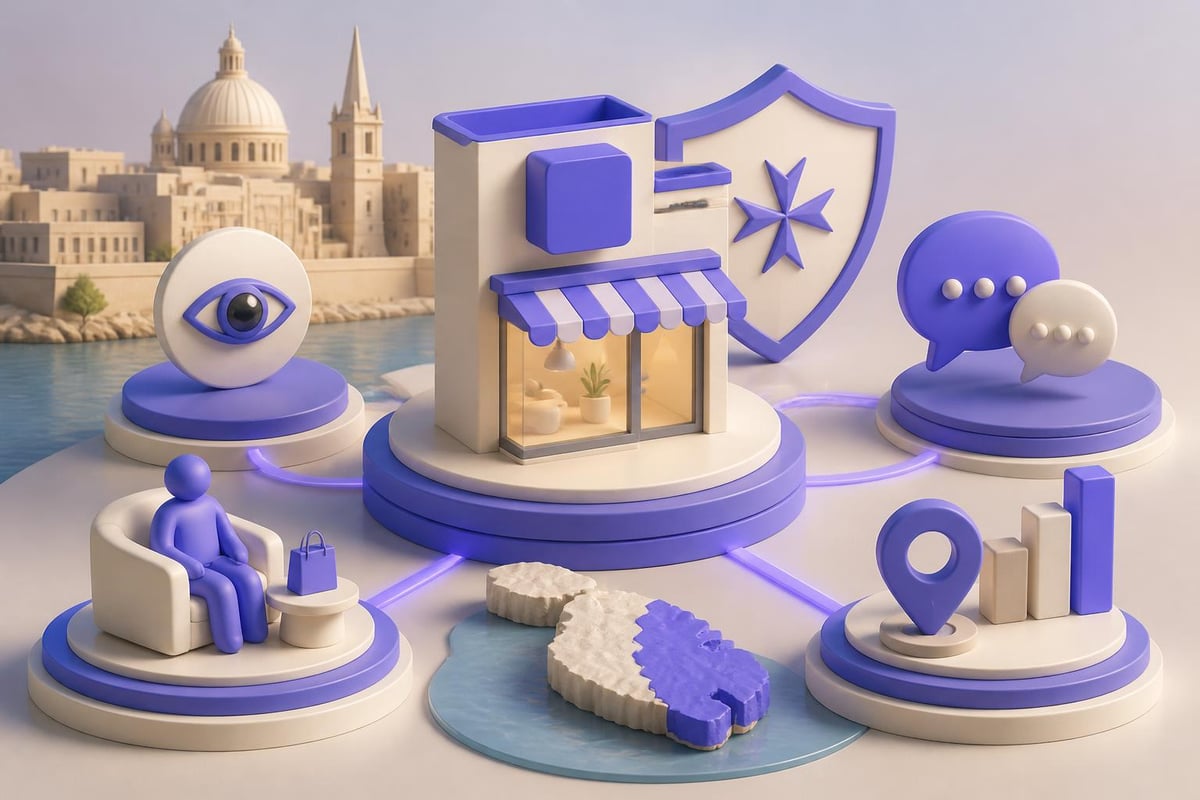
Core Elements of Branding Malta Companies
Building a brand involves more than designing a logo. It requires strategic decisions about how a business presents itself, communicates value, and delivers experiences that match expectations.
Visual Identity Systems
Visual identity creates the first impression. Maltese consumers encounter brands through shop windows, social media feeds, product packaging on retail shelves, and websites. Each touchpoint should reinforce the same visual language.
A complete visual identity system includes:
- Logo design that works across all sizes and applications
- Color palette selected for recognition and emotional resonance
- Typography that supports readability and brand personality
- Design patterns that create consistency without repetition
- Application guidelines that maintain quality as businesses scale
The difference between amateur branding and strategic branding shows clearly in execution. Professional systems account for how logos appear on business cards, vehicle wraps, website headers, social media profiles, and packaging labels simultaneously.
Messaging and Positioning
How a business talks about itself matters as much as how it looks. Messaging defines what a company stands for, who it serves, and why customers should care.
| Branding Element | Weak Approach | Strategic Approach |
|---|---|---|
| Tagline | "Quality products since 2020" | "Malta's trusted source for organic local ingredients" |
| About page | Generic industry description | Specific story about founder expertise and customer commitment |
| Service descriptions | Feature lists without context | Benefit-focused explanations tied to customer outcomes |
Positioning requires understanding competitors and finding genuine differentiation. Malta's small market means businesses cannot succeed by being everything to everyone. Strategic positioning identifies a specific audience and delivers exceptional value to that group.

Branding Malta Tourism and Hospitality Businesses
Tourism remains a cornerstone of Malta's economy. Hotels, restaurants, tour operators, and experience providers face intense competition for visitor attention. The research on branding in sustainable tourism highlights how effective branding communicates authentic local experiences while meeting international quality expectations.
Successful tourism brands in Malta balance local character with professional presentation. A boutique hotel in Valletta competes against international chains by emphasizing unique architecture, personalized service, and authentic Maltese hospitality. Generic branding erases those advantages.
Key branding priorities for Malta tourism businesses:
- Photography that showcases genuine experiences, not stock images
- Website design that loads quickly on mobile devices and converts browsers into bookers
- Packaging and collateral that guests want to keep as souvenirs
- Social proof through reviews, testimonials, and user-generated content
- Consistent voice across booking platforms, social media, and in-person interactions
Many Malta hospitality businesses underinvest in branding services that could significantly improve their market position and revenue per customer.
Retail and Product Branding Strategies
Malta's retail sector spans local shops, supermarket brands, specialty food producers, and artisan manufacturers. Product branding determines shelf appeal and repeat purchase rates.
Packaging design represents a critical branding investment. Maltese consumers encounter products from local producers alongside international imports. Professional packaging signals quality and builds confidence in unfamiliar brands.
Packaging Design Considerations
The best product packaging balances visual appeal with practical requirements:
- Shelf visibility in competitive retail environments where dozens of similar products compete for attention
- Information hierarchy that communicates product benefits quickly while meeting EU labeling requirements
- Material selection that protects products while supporting sustainability commitments
- Brand consistency that reinforces recognition across product lines
Local food and beverage brands particularly benefit from strategic packaging that tells authentic Malta stories while meeting modern consumer expectations for quality and transparency.
Building Brand Equity Over Time
Branding Malta businesses successfully requires long-term commitment. Brand equity builds through repeated positive experiences, consistent communication, and steady quality delivery.
Short-term tactics like promotional discounts or viral social campaigns create temporary awareness. Strategic branding creates compounding value that increases customer lifetime value and reduces acquisition costs over time.
Brand Consistency Across Channels
Modern Malta businesses operate across multiple channels simultaneously. A restaurant serves in-person diners while managing delivery platforms, social media accounts, and a website. A retail shop balances physical location traffic with e-commerce orders.
Each channel reinforces or undermines overall brand perception. Consistency requires:
- Unified visual presentation across all customer touchpoints
- Aligned messaging that tells the same brand story in different formats
- Service quality that matches brand promises regardless of channel
- Customer experience design that feels cohesive and intentional
The Empixa portfolio demonstrates how Malta businesses across industries apply consistent branding to strengthen market position and support growth objectives.
Measuring Branding Impact
Business owners often struggle to measure branding effectiveness. Unlike advertising campaigns with direct response metrics, branding creates value through recognition, preference, and loyalty that compound over months and years.
Useful branding measurement approaches:
| Metric Category | What to Track | Why It Matters |
|---|---|---|
| Awareness | Direct traffic, branded search volume, social media followers | Measures how many people know your business exists |
| Perception | Customer surveys, review sentiment, net promoter score | Reveals whether brand promises match customer experience |
| Preference | Repeat purchase rate, referral percentage, price premium tolerance | Shows whether customers actively choose you over competitors |
| Value | Customer lifetime value, average transaction size, profit margins | Demonstrates business impact of brand equity |
Strong brands command price premiums because customers trust quality and value the experience. Measuring these premiums quantifies branding return on investment.
Next Steps for Malta Businesses
Branding Malta companies effectively starts with honest assessment. Review current visual identity, messaging, customer touchpoints, and competitive positioning. Identify gaps between current presentation and desired market position.
Professional guidance accelerates progress. Working with experienced brand strategists prevents costly mistakes and ensures investments generate measurable returns. The approach should balance quick wins that build momentum with foundational work that supports long-term growth.
Explore resources on marketing business logos and online marketing and branding to understand how visual identity connects with broader business strategy. Strong brands emerge from aligned strategy, consistent execution, and commitment to delivering exceptional customer experiences.
Strategic branding separates Malta businesses that thrive from those that struggle for attention in competitive markets. Professional visual identity, clear messaging, and consistent customer experiences build recognition and trust that drive sustainable growth. Empixa helps Malta businesses develop brands that stand out through strategic positioning, high-quality design, and execution that delivers measurable results. Try Empixa's brand development services.