
Building a digital marketing team in 2026 requires more than hiring a few specialists and hoping for the best. Malta's growing business landscape demands structured teams that combine strategic thinking with tactical execution. Whether you're scaling an established company or launching something new, the right team structure determines whether your marketing efforts generate real returns or simply drain resources.
Core Roles Every Digital Marketing Team Needs
The foundation of any effective digital marketing team starts with clearly defined roles. Modern digital marketing teams require specialized expertise across multiple disciplines, but the specific roles depend on your business model and growth stage.
Strategic Leadership
Someone must own the overall vision and coordinate efforts across channels. This person translates business objectives into marketing strategies, allocates budgets, and ensures every campaign serves a specific purpose. Without strategic oversight, even talented specialists work in silos, creating disconnected campaigns that confuse customers rather than convert them.
Key responsibilities include:
- Setting quarterly and annual marketing objectives
- Allocating budget across channels based on ROI data
- Ensuring brand consistency across all touchpoints
- Reporting results to executive leadership
Content and Brand Development
Content creation sits at the heart of digital marketing. This role produces the blog posts, social media updates, email campaigns, and video content that attract and engage your audience. Strong content specialists understand your brand voice and can adapt it across platforms without losing consistency.
For Malta businesses specifically, content creators must understand local market nuances. They should reference local events, understand Maltese consumer behavior, and write in ways that resonate with both local and international audiences your business serves.
Performance Marketing Specialists
Performance marketing roles focus on paid channels like Google Ads, Facebook advertising, and sponsored content. These specialists manage budgets, optimize campaigns, and drive measurable conversions. They live in analytics platforms, constantly testing ad copy, audience segments, and bidding strategies.
| Role | Primary Focus | Key Metrics |
|---|---|---|
| PPC Specialist | Paid search campaigns | CPC, conversion rate, ROAS |
| Social Media Ads Manager | Paid social advertising | CPM, engagement rate, cost per lead |
| Display Advertising Specialist | Banner ads and retargeting | Click-through rate, view-through conversions |
SEO and Organic Growth
Organic visibility requires dedicated attention. SEO specialists optimize website content, conduct keyword research, build backlinks, and monitor search rankings. This role combines technical skills (site speed, schema markup, crawlability) with content expertise (keyword optimization, internal linking, content gaps).
Malta's local search landscape presents unique opportunities. Businesses targeting "Malta" keywords face less competition than global markets, making local SEO particularly valuable for reaching nearby customers.
Structuring Your Digital Marketing Team
Team structure matters as much as individual roles. The wrong structure creates bottlenecks, slows decision-making, and frustrates talented team members.
In-House vs. Agency vs. Hybrid
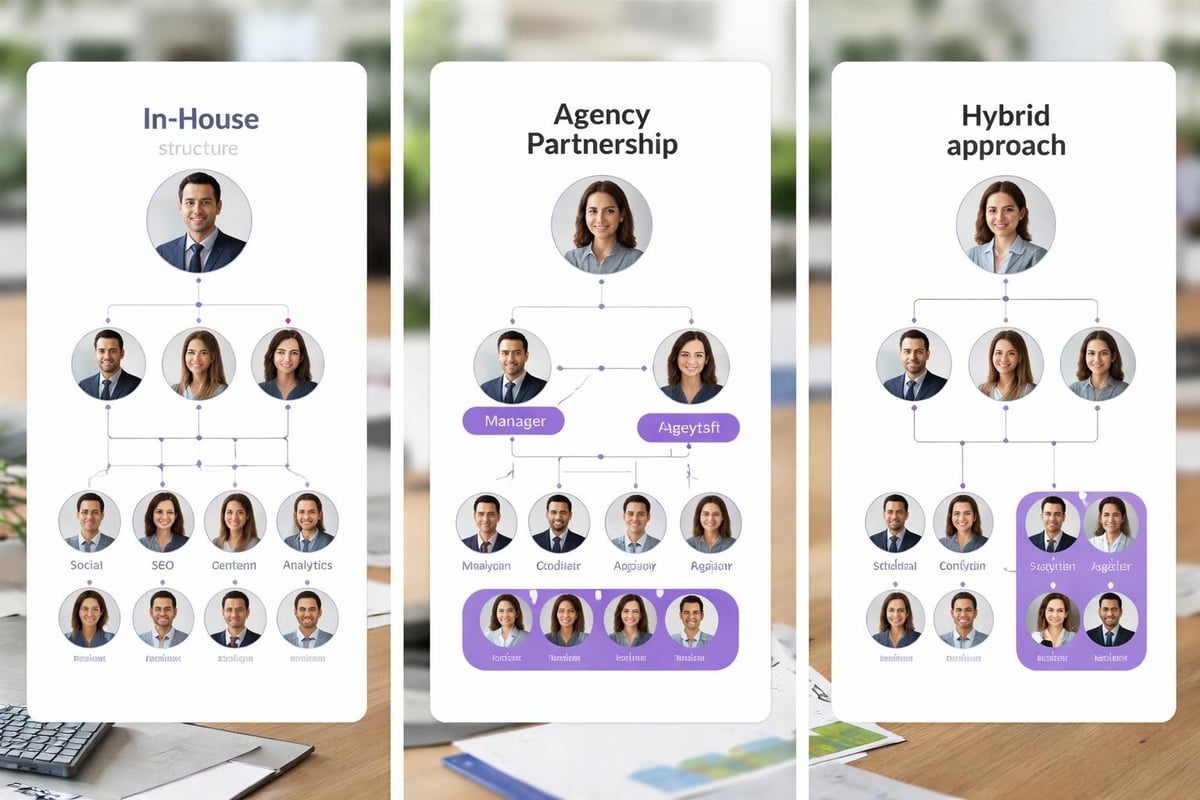
In-house teams offer complete control and deep product knowledge. Team members understand your business intimately and align closely with company culture. However, building in-house teams requires significant investment in salaries, benefits, tools, and ongoing training.
Agency partnerships provide instant access to diverse expertise without hiring overhead. Agencies bring experience from multiple clients and industries, often spotting opportunities in-house teams miss. When you need comprehensive digital marketing campaigns that span multiple channels, working with an experienced agency accelerates results while keeping fixed costs manageable.

The hybrid approach combines both models. Maintain strategic roles in-house while outsourcing specialized or high-volume work to agencies. Many Malta businesses use this model effectively, keeping brand strategy and customer relationships internal while delegating technical SEO, paid advertising, or content production to specialists.
Skill Depth vs. Breadth
T-shaped marketers combine broad understanding with deep expertise in one area. They understand how different channels work together but specialize in specific disciplines. This approach creates more flexible teams where members contribute across projects while owning specific domains.
For smaller Malta businesses, generalists often make more sense initially. One person might handle both social media and email marketing, or combine SEO with content creation. As you scale, shift toward specialists who master individual channels.
Building Your Team Around Business Goals
Your digital marketing team structure should reflect your specific business objectives, not generic best practices. Different goals require different capabilities.
Growth-stage companies prioritize customer acquisition. They need strong performance marketing capabilities, conversion optimization expertise, and aggressive testing frameworks. Measuring performance through platform-centric metrics helps these teams optimize spending and scale what works.
Established brands focus on retention, lifetime value, and brand development. Their teams emphasize email marketing, customer experience, loyalty programs, and consistent brand development across touchpoints.
Setting Clear Success Metrics
Every digital marketing team member should understand which metrics matter for their role. Vanity metrics like total followers or page views rarely connect to business outcomes. Instead, focus on:
- Revenue-driving metrics (conversions, customer acquisition cost, lifetime value)
- Engagement quality (time on site, pages per session, return visitor rate)
- Channel efficiency (cost per lead by source, organic traffic growth)
- Brand health (direct traffic, branded search volume, customer satisfaction)
Define these metrics before building your team. The roles you prioritize should directly support improving these numbers.
Tools and Technology Stack
Modern digital marketing teams rely on integrated tool stacks that connect data across platforms. Your team needs analytics platforms, content management systems, email marketing software, social scheduling tools, and project management platforms.
Essential tool categories:
- Analytics and reporting (Google Analytics, Search Console, platform-specific dashboards)
- Content creation and management (WordPress, content calendars, design tools)
- Marketing automation (email platforms, CRM integration, workflow automation)
- Collaboration and project management (task tracking, file sharing, communication tools)
Don't over-invest in tools before you have team members to use them. Start with free or low-cost options, then upgrade as specific needs emerge. Explore Empixa’s portfolio to see how integrated marketing campaigns come together across multiple channels.

Training and Development
Digital marketing evolves constantly. Platform algorithms change, new channels emerge, and customer behavior shifts. Your team needs regular training to stay effective.
Allocate budget for courses, conferences, and certifications. Encourage team members to experiment with new platforms before competitors discover them. Create time for learning, not just execution.
Internal knowledge sharing accelerates team growth. When one person masters a new skill, have them teach others. This builds collective capability faster than individual training alone.
Building an effective digital marketing team takes careful planning, the right mix of skills, and clear alignment with business goals. Whether you choose in-house specialists, agency partners, or a hybrid approach, focus on roles that directly support your growth objectives and measure what matters. Empixa helps Malta businesses build complete marketing systems that drive real results through strategic branding, high-performance websites, and data-driven campaigns. Try Empixa's brand development services.